Keynote: Realising the Benefits of Software-Defined RF Instrumentation
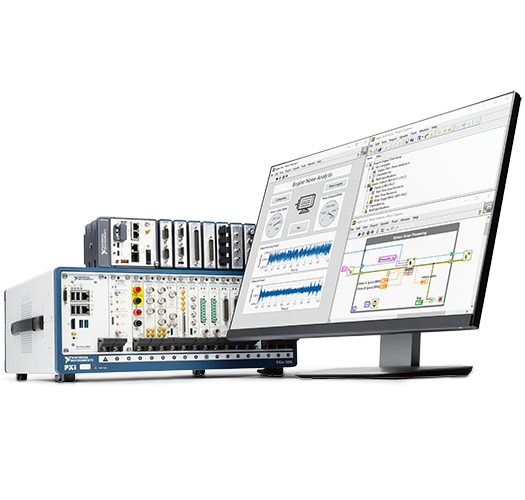
The last decade has seen a growing trend in the RF and Wireless test industry towards modular, software-defined instrumentation. The driving force behind adoption of PXI as the standard for automated RF test largely centres around three benefits, including: faster measurement speed, broader instrument flexibility and lower-cost measurement accuracy. In this session, we’ll give a high level overview of PXI instruments and share real-world examples where using PXI has provided engineers with real benefits.
The Art of Benchmarking Measurement Speed: PXI vs. Traditional Instruments
For engineers automating measurements, speed is everything. However,quantifying the measurement speed is often difficult, requiring careful attention to settings such as averaging, number of symbols, capture period, and other factors. Learn the fundamental trade-offs of each of these factors, best practices to optimise overall test time, and walk through a thorough benchmark comparison with a common rack-and-stack instrument to see how it compares with PXI.
Introduction to 3GPP LTE PHY Layer
Gain an overview of the 3GPP LTE physical layer and learn about common RF measurements for LTE, including transmit power, adjacent channel power and error vector magnitude (EVM). Also discover best practices for automating LTE measurements in design validation or production test applications.
Advanced Network Analyser Measurement Techniques
Vector network analysers (VNAs) are some of the most complex RF instruments, but engineers can use them to perform a wide range of measurements. Learn some VNA calibration techniques and explore advanced measurement concepts, including time-domain measurements.
Advanced RF Signal Analyser Measurement Techniques
Getting every last decibel of dynamic range for a particular measurement requires careful attention to several signal analyzer settings including reference level, LO power and IF bandwidth. Examine the trade-offs between each of these settings illustrating their impact on measurement accuracy and repeatability. Also learn basic techniques you can use to determine whether you’re measuring the performance of your DUT or the instrument.
Signal Intelligence and Software-Defined Radio
See how the latest commercial-off-the-shelf (COTS) technologies are affecting signal intelligence today, such as flexible modular instruments helping to meet shorter development cycles and reconfigurable FPGAs providing inline signal processing and real-time response.
Fundamentals of Phase-Coherent Measurements
While a conventional RF instrument is limited in its recording abilities, PXI Express RF instruments have emerged as a leading platform for RF record and playback. In this presentation, learn about key technologies used for recording RF signals off of the air with an antenna. In addition, see how you can configure RF recording systems for multichannel, phase-coherent, RF signal acquisition.
Linking RF Design and Test through AWR Software and LabVIEW
Appreciate an in-depth understanding of AWR RF, Microwave, EM and systems simulation tools and learn how you can use them in conjunction with RF vector signal generators and analysers to validate performance of the simulated model, including final hardware in loop at a very early stage of development.